What to Look for in a Basketball Trainer
What to Look for in a Great Basketball Trainer (And Why It Applies to Any Sport).
Parents, when you hire a basketball trainer for your child, you’re not just paying for drills and sweat. You’re trusting someone with your child’s development, their confidence, and your time. The right trainer helps them improve fast, fixes problems before they get locked in, and teaches them skills they can actually use when the game gets real.
This advice works for basketball or any sport. The examples below lean basketball because it’s the space that I occupy, but the standards don’t change whether you play football, soccer, baseball, or volleyball.
Why choosing the right trainer matters
A trainer can either build your child up or waste months of progress. You want someone who teaches with purpose, not someone who just fills an hour. That starts with development, the first must-have.
In basketball, a trainer should be able to develop the basics needed to play:
Ball handling
Shooting
Passing
Learning defense
Offensive and Defensive Concepts
As a parent, your job is simple: make sure the trainer can meet your kid where they are today, then move them forward in a way that holds up in games.
\
Signs your trainer can truly develop skills
Development is not random. It follows a clear pattern.
Here’s a simple progression you should see in training:
Identify the weak skills (and why they’re weak).
Build them step-by-step with targeted instruction and feedback.
If a trainer can’t explain what they need, why they need it, and how the drill connects to improvement, they're probably getting busy work.
If you’re trying to get a clearer picture of where your child currently fits, use a structured level check like: 9 Stages of Development. Knowing the starting point makes it easier to pick the right trainer and set realistic goals.
A great trainer fixes bad habits before they stick
Bad habits don’t usually show up because you’re lazy. They show up because you learned something the wrong way, got away with it, or never got corrected. The longer you repeat a habit, the more it becomes your default under pressure.
A trainer should spot those issues quickly and correct them with clear cues and the right drills. If they ignore obvious problems and just keep running workouts, that’s a red flag.
they ignore obvious problems and just keep running workouts, that’s a red flag.
## Real basketball habit fixes you should expect
Two common examples show what “fixing” actually looks like in practice, not just in talk.
Left-hand layups: You see this all the time. A player drives left but still finishes with the right hand. A good trainer doesn’t just say “use your left.” They show proper left-hand form, then add strength drills and reps that force left-hand finishing until it starts to feel normal.
Between-the-legs dribble footwork: Another common issue is sloppy footwork on a between-the-legs move. For example, when going from right to left, some players “skip” and bring the wrong leg behind, which throws off balance and timing. A trainer should correct the step so you learn to step forward with the right footwork pattern, then rebuild the move with control and speed.
If you want context on a common training mistake some players make, here is a video segment on correction during a live training that can help you see howYour trainer should handle multiple skill levels
You don’t want your child to outgrow the trainer in three months, then have to start over with someone new. The best situation is a trainer who can teach them as a beginner, then keep pushing as they become intermediate and advanced.
This matters for two reasons:If a trainer only knows beginner-level teaching, they will eventually plateau.
If a trainer only wants advanced players, the player might not get the patience and detail needed early on.
A trainer who can coach across levels can keep the development moving without constantly switching systems, cues, and expectations.
How skill level affects trainer fit
The “right” trainer depends on where you are today and where you’re trying to go next. This information makes it easy to scan:
Developmental -Trainer Fit Strong fundamentals teaching, lots of correction, simple progressions. Risks of the Wrong Fit You get flashy drills, but your base stays weak.
*Intermediate -Trainer Fit Builds counters, footwork detail, decision-making under pressure. Risks of the Wrong Fit You repeat basics forever and stop growing.* Advanced -Trainer Fit Sharp game reads, efficient reps, game-speed standards. Risks of the Wrong Fit You train hard, but nothing transfers to games.
You can also compare broader coach qualities in resources like Teaching Players what they need instead of what they want sometimes to help you put words to what you’re seeing in sessions.“Positionless” basketball still needs position-specific training
The game can be positionless in style, but you still have a role. You still have strengths. You still have responsibilities. That’s why position necessary is a real thing when you’re choosing a trainer.
If your trainer’s background is mostly as a post player, it can be harder for them to fully train a guard, especially when it comes to guard footwork, pace, and ball-handling problem-solving. That doesn’t mean a post player can’t teach skill, it means you should make sure they can teach the skills that match how your child will actually play.Guard vs. Post training, what changes?
Different roles need different details. Even when everyone handles the ball more now, the focus still shifts.Guards: Need a full skill set with strong ball handling, change of pace, reads, and clean footwork.
Post players: Often bring physicality, finishing, and inside footwork, but might not emphasize guard-level handling details the same way.
You don’t need a trainer who only trains one position, you need a trainer who understands the position the player is strongest at and can train for that reality.
Here's a simple way to think about it:
Player role
What the trainer should understand
Guard
Ball handling, pace, change of direction, decision-making, shooting off the dribble
Wing
Spacing, attacking gaps, shooting off movement, help-side reads, finishing through contact
Post
Seals, footwork, touch around the rim, rebounding angles, inside positioning
The game may ask you to do a little of everything. Still, your training should match the role they are most likely to fill. If the trainer's whole background is built around post play, they may not be the best fit for a guard who needs tight handle work, quick reads, and perimeter footwork.
That doesn't mean a post player can't teach anything outside the paint. It means you should look for someone who understands the full picture of the role your child is training for. The better your trainer knows the likely position, the easier it is to build useful habits instead of random ones.
Playing experience is great, but teaching skill is the deal-breaker
A trainer’s resume can look impressive. Four years of college, overseas experience, high-level games played. That’s all valuable.
But it looks great on the resume, but you still have to answer one question: can they teach you what you need, in a way you can actually learn?
Teaching is its own skill. A trainer might know how to do something, but struggle to break it down into steps you can repeat. If they can’t explain, correct, and adjust based on how you respond, their experience won’t help you much.
This issue doesn’t happen constantly, but it happens enough that it’s worth paying attention early. You usually will know within a few sessions if they’re learning faster or just getting tired.You've probably seen this before in school, work, or sports. Some people know a lot but can't explain it in a way that makes sense. The same thing happens in training. A former player may have done the skill well for years, but that doesn't always mean they can break it down for your child.
When you're comparing options, look beyond the playing history. Watch how the trainer talks.
A few warning signs stand out fast:
Explanations are unclear or too rushed
Corrections stay vague
The trainer can't adapt to the player in front of them
The workout looks active, but learning feels scattered
If they can't show it, that's a red flag
A trainer should also be able to demonstrate the skill they're teaching. That doesn't mean every trainer has to move like a current pro. It does mean they should be able to show the motion, the timing, the footwork, and the body position the player is trying to copy.
## Be careful when a trainer also runs a team
Some trainers also coach a team. That can be a positive, but it can also create tension depending on your situation.
If your child is already playing for another coach, that coach might feel uncomfortable with them training under someone who has their own team. It doesn’t mean anyone is trying to “take” you. It’s just a real dynamic that can show up in youth sports.
Here’s a simple way to think about it:Pros: Team coaches often understand structure, roles, and what shows up in real games.
Cons: Attention can drift toward players on their own team, and that can leave your child behind.
The key is being honest about expectations. You want the development to stay the priority, not politics.
A trainer must be able to demonstrate what they teachIf a trainer can’t show you the movement, it’s hard to trust the lesson.
You have to be able to demonstrate it. That includes simple skills and advanced ones. When you see it done correctly, it is processed faster. They can match the rhythm, the posture, and the timing. Without a demo, it can be guessing, and guessing leads to miscommunication.
Why demonstration speeds up learning
When a trainer demonstrates, the learning loop becomes tighter:
Trainer shows the skill correctly. Your child sees the standard clearly.
Copy it, then get corrections faster.
This matters even more for kids. A short, clean demo often teaches more than a long speech.
Training should be game-ready, not just drill-ready
Players can do a lot of impressive-looking workouts that don’t translate to real games. A strong trainer keeps asking, “Will you use this on the court?”
That doesn’t mean every rep has to look exactly like a game. Sometimes you do a drill to build control or coordination. But the trainer should still connect the drill to a game outcome.
For example, they might work on multi-dribble combos to improve handling, but you shouldn’t train as if you’ll do four straight moves in a real possession. In most situations, you need one or two dribbles to create an advantage, then make a decision.
Game-ready training usually includes things like:
One or two-dribble moves that help you beat a defender
Coming off screens with your hands and hips ready
Shooting with balance and follow-through, without leaning back
Cuts to the basket that avoid defenders and create angles
Closeouts and defensive footwork that carry into live play
The best trainers also build progressions. First, you learn the movement. Then you repeat it enough to clean it up. After that, the drill starts to look more like a real possession. That's how skill turns into instinct. When the game starts moving fast, you don't want to think through every step. You want the reps to carry them.
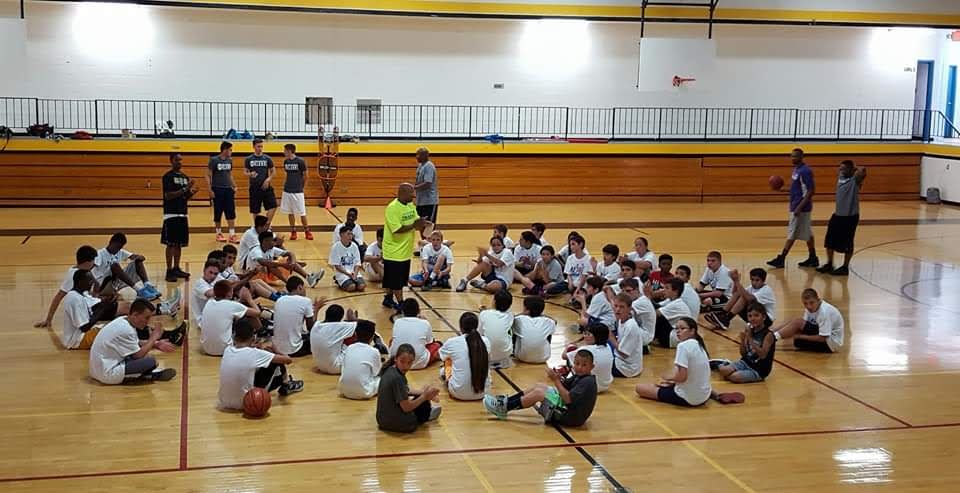
Here is an example of The Training being utilized in Games.
Build drills until you don’t have to think
The goal is simple: when the game speeds up, you shouldn’t be stuck thinking about mechanics. You should be reacting.
That happens when drills progress the right way:
Start slow enough to get the technique right.
Add speed once the movement is clean.
Add pressure so you can execute when tired or rushed.
When training is set up like that, they walk into games prepared. They don’t need to “hope” the move works, they’ve already done it hundreds of times with standards.
Conclusion: Choose a trainer who can build, correct, and translate
You’re looking for a basketball trainer who can develop skills, fix bad habits, teach across levels, and train your child for what actually happens in games. You also want someone who can demonstrate what they teach and communicate in a way they understand.
If you want the right fit, start with teaching, not hype. That's what helps them improve for real.